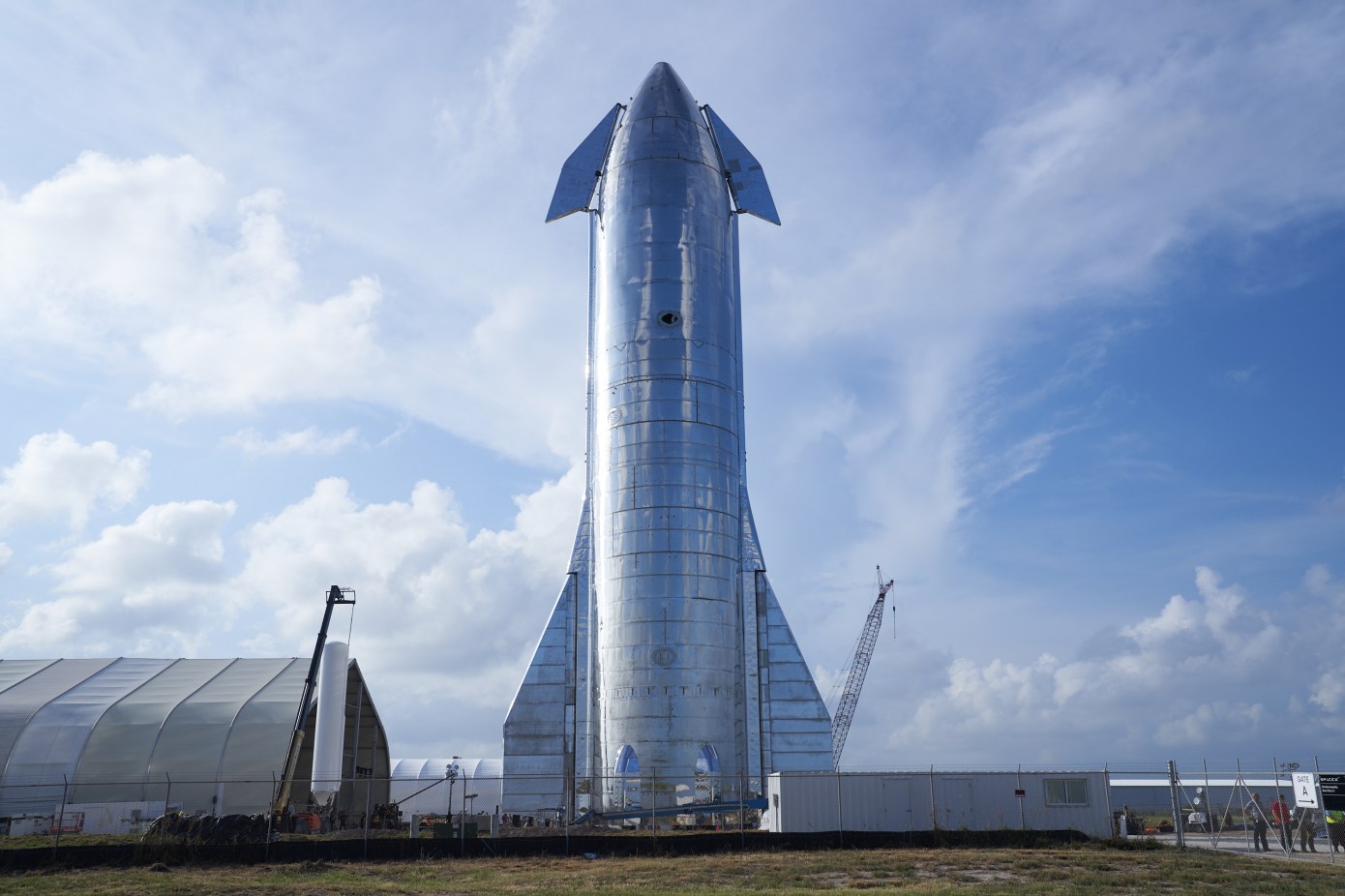
SpaceX, the private space exploration company founded by entrepreneur Elon Musk, is in the final stages of preparations for the first flight of its newest rocket. Dubbed the Starship, this fully reusable spacecraft is designed to carry humans and cargo to Earth orbit, the Moon, Mars, and beyond.
The Starship spacecraft is being developed in two stages, the Super Heavy booster, and the Starship spacecraft. The Super Heavy booster will provide the initial thrust to get the Starship spacecraft off the ground, and the Starship spacecraft will carry the crew and cargo to their destination. The booster and the spacecraft will be able to land back on Earth and be reused for future missions.
The Starship spacecraft is a significant departure from SpaceX's previous rockets, such as the Falcon 9 and Falcon Heavy. The Starship is much larger, standing at over 50 meters tall, and is also able to carry a much larger payload. Additionally, the Starship is designed to be fully reusable, which is a significant step forward in making space travel more cost-effective and sustainable.
The first flight of the Starship is expected to be an uncrewed test flight, which will take off from SpaceX's launch site in Boca Chica, Texas. The spacecraft will be launched to an altitude of around 20 kilometers before landing back on Earth. The goal of this test flight is to collect data on the performance of the spacecraft, and to ensure that it is safe for future manned missions.
The first flight of the Starship is a significant milestone for SpaceX, and it marks the company's continued progress towards its goal of making space travel more affordable and accessible. The Starship spacecraft is designed to be used for a wide range of missions, including satellite launches, crewed missions to Earth orbit, the Moon, and Mars, and even point-to-point travel on Earth.
In conclusion, SpaceX is in the final stages of preparations for the first flight of its newest rocket, the Starship. This fully reusable spacecraft is designed to carry humans and cargo to Earth orbit, the Moon, Mars, and beyond.
Comments
Post a Comment